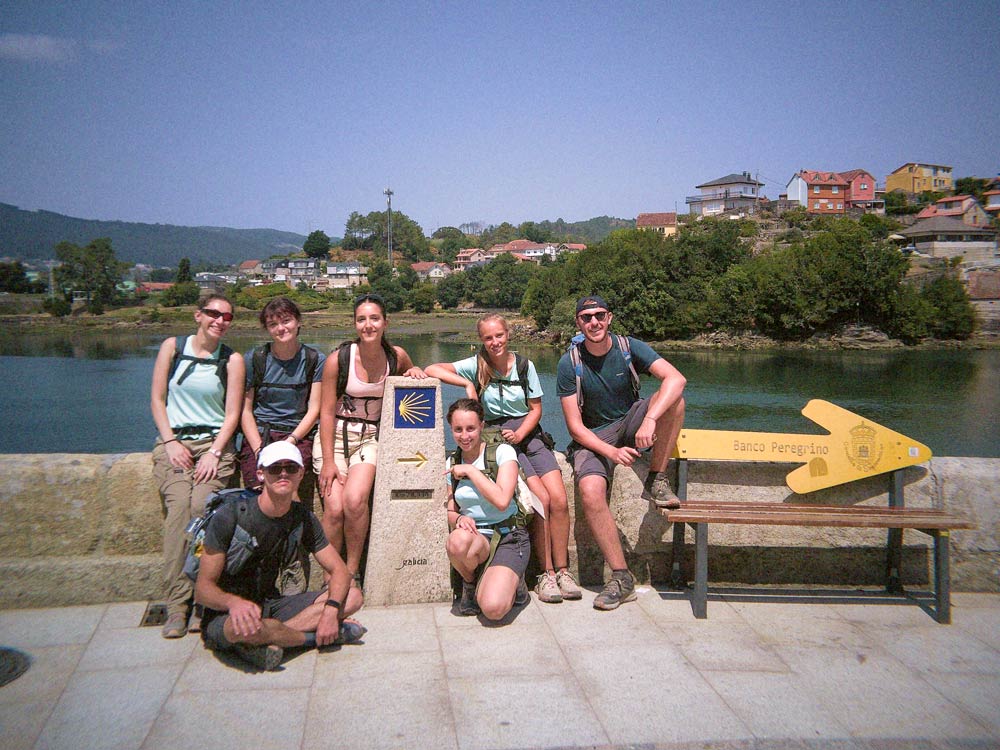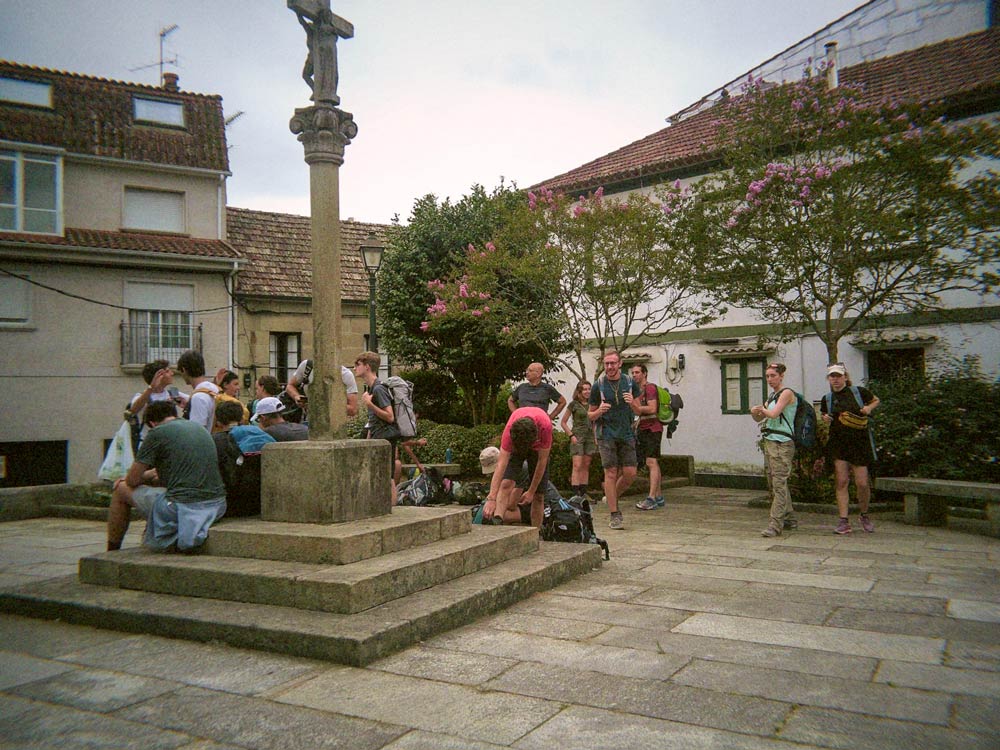


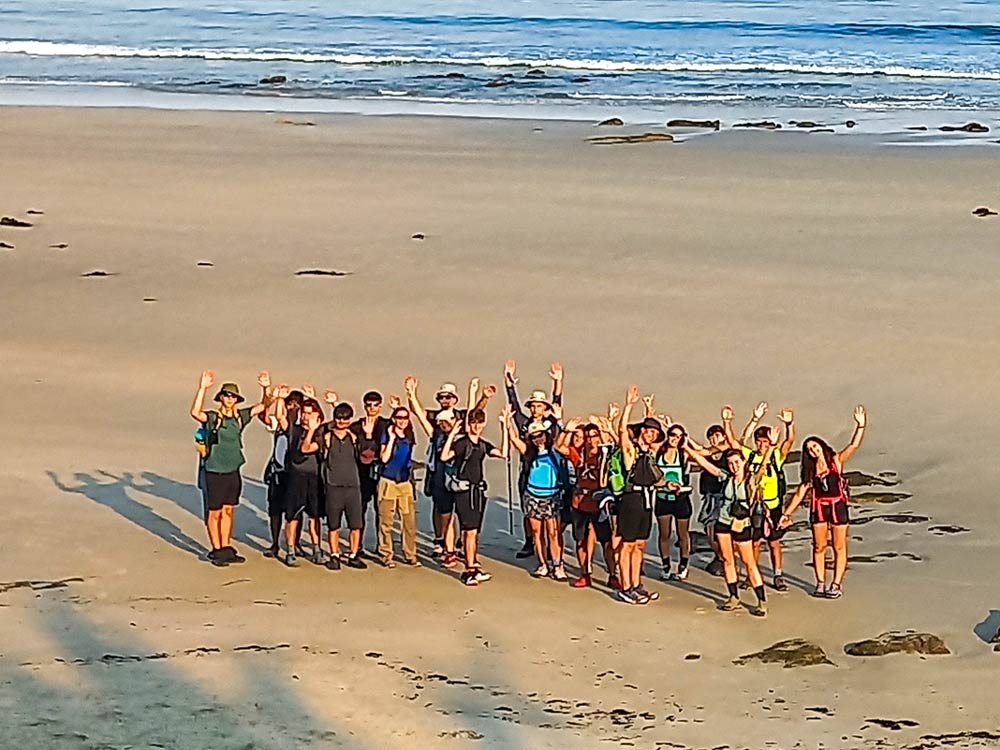
From July 27th to August 3rd, the young men and women who make up “Cima 1” (students in their fourth and fifth years of high school)—part of “Gruppo 1,” the youth group at the Gesù Nazareno parish in Turin—walked approximately 130 kilometers along the Portuguese route of the Camino de Santiago. Here is their account of those eight days on the road.
“This summer, ‘Cima 1’ walked the Camino de Santiago, an experience made possible in part by fundraising efforts organized within the parish. Accompanied by Father Andrea Marchini—the parish priest of Gesù Nazareno—and group leaders Paco, Chiara, and Simone, we set off on July 27th,” recount Elisa, Matteo, and Paolo. The group flew from Turin to Porto, in Portugal, then traveled by bus to Baiona, the starting point of the Camino. Lorenzo recalls: “We set out to embark on a new adventure. We began our journey with our backpacks, full of enthusiasm and a desire to share the road, our experiences, and our spirituality.” The first day brought a surprise: “We enjoyed our first day in Baiona, where—for the first time in the history of ‘Group 1’—we went for a swim in the ocean. And the very next day, we began our trek.”
Five days, one hundred and thirty kilometers, and lots of bocadillos
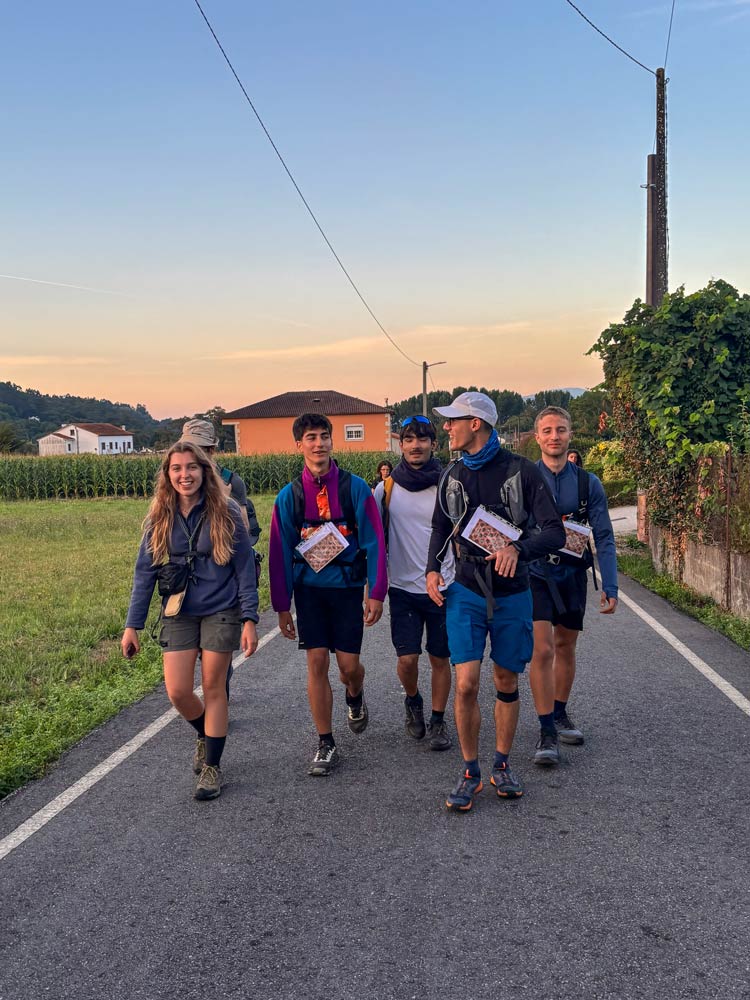
“These have been very intense days. Amidst the exhaustion, the blisters, the laughter, and Father Andrea’s energetic pace, the road allowed us to look within ourselves—guided by activities prepared by our leaders—and to open up completely to one another,” share Elisa, Matteo, and Paolo. “We also had the chance to eat the quintessential Spanish dish: the *bocadillo* (a traditional sandwich).” The days followed a specific rhythm: “We would set off before sunrise; after the first few kilometers, we’d pray Lauds, followed immediately by breakfast—a *bocadillo*—before continuing our journey,” explains Lorenzo. “Our daily destination was the hostel where we would spend the night; once there, we’d wash ourselves and our clothes before heading to dinner. After a time of prayer—during which each of us shared the hopes we were carrying with us to Santiago—we would go straight to sleep, ready to set off again the next day.”
Among the small daily rituals is the collection of stamps on the pilgrim’s credentials. Sofia says: «The stamps… mandatory, one per stage, and there wasn’t one the same as the other. And not just in hostels: in restaurants, bars, shops, even on the street. There were those who sold stamps made with sealing wax for two euros on the dirt road, with their own table. Regarding credentials, the document that each pilgrim must carry with him to be identified as such and therefore entitled to pilgrim benefits, it was mandatory to have one per stage, but there were many more spaces. Someone has exhausted them, collecting stamps on the street, breaking away from the group and running to a bar, with their own credentials and sometimes even those of someone else, to have them stamped. If you do the Camino – warns Sofia – every evening write the date next to the day stamps. We discovered it more or less the evening before having to go and get the Compostela (the official document issued by the ecclesiastical authority which certifies the completion of the Camino de Santiago to the tomb of the apostle Saint James, ed.), and few had pens, so waiting lists were created. The credentials full of stamps testify to the journey undertaken, the places crossed and the memories of that moment”.
There was no shortage of unexpected events, surprises, and incidents destined to become part of the group’s shared memories. “The journey even brought us some ‘supernatural’ occurrences, such as the miraculous healing of Giulia’s ankle: even though every doctor had said there was no chance she would be able to walk, she ended up leading the group with great energy for 130 kilometers,” recall Elisa, Matteo, and Paolo.
Walking together, getting to truly know one another
The Camino offered everyone the chance to get to know others—and themselves—better. “What can I say, other than that it was an unforgettable experience?” says Andrea. “Along the way, not only do you get to share wonderful moments with people you’ve known your whole life—strengthening those bonds—but it’s also extraordinary how easily you find yourself talking about anything and everything with complete strangers, leading to new friendships. The Camino isn’t just about building relationships; it’s also a journey of self-discovery. During the long hours of walking, it’s easy to spend some time alone and simply reflect on whatever happens to be on your mind at that exact moment. In a way, even the blisters on your feet, the exhaustion, and the urge to stop and rest—even when you know you have to keep going—only make the whole experience more beautiful and unique. Sharing this journey with friends is one of the best things that has ever happened to me.” This sentiment is echoed by Donato: “The Camino de Santiago was a deeply introspective experience. While walking, I had the chance to reflect extensively on my life choices—especially on my own behavior and who I am as a person. This was partly thanks to the questions posed by the group leaders in our ‘logbook,’ which prompted me to think about past decisions that led to a decisive shift in my social life. My favorite time was the morning; we’d wake up early to walk in the cool air, which allowed me to focus more deeply on my own thoughts. The Camino also helped me strengthen my existing bonds and, most importantly, realize who the truly important people in my life are.” Camilla, too, describes the experience as one that engages the body, the mind, and our relationships: “Santiago was an unforgettable experience. Sharing such a demanding journey with my friends filled my heart with gratitude.” Every moment spent walking was time well spent; the mind has space to reflect, the body can push past its own limits, and conversation allows us to discover facets of the people around us. I could not have hoped for a better experience. The Camino de Santiago helps you uncover a new world—both within yourself and all around you.
Among the many shared experiences, Giacomo’s stands out; he even celebrated his eighteenth birthday while on the road: “During the days we spent together, I had the chance to get to know my fellow travelers even better, discuss a wide range of topics, and engage in deep reflection about myself, my faith, and my personal life—often through conversations with the others. I was also lucky enough to celebrate my eighteenth birthday right along the way; it was wonderful to share such a joyful, celebratory moment with all my friends. Of course, there were challenges: as the days went by, my feet grew increasingly sore, my pace slowed down, and my limp became more pronounced. Yet, all that effort was rewarded upon our arrival in Santiago de Compostela. Seeing the basilica—which we had dreamed of for so long—was incredibly fulfilling, and being able to rest in a bed for more than eight hours was an absolute delight. The Camino was an excellent summer experience, defined by shared hardships and pain, but also by moments of immense happiness and joy—I highly recommend it. A special shout-out to Father Andrea, who kept pace with us—and often set a faster pace than the rest of us—throughout the entire journey. He’s a legend!”
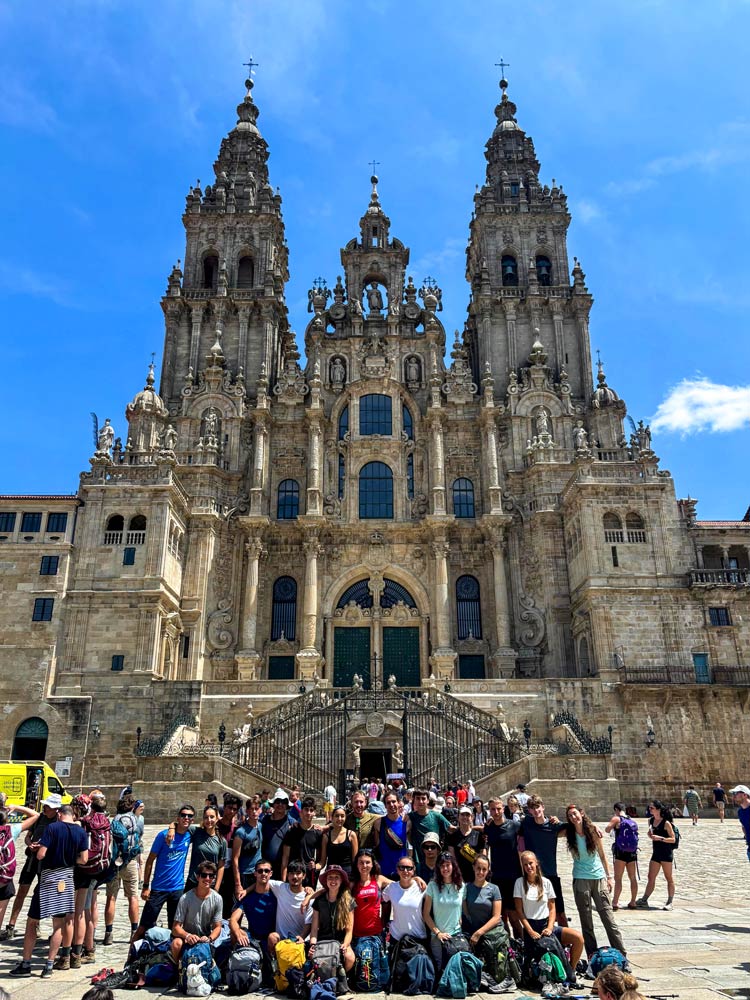
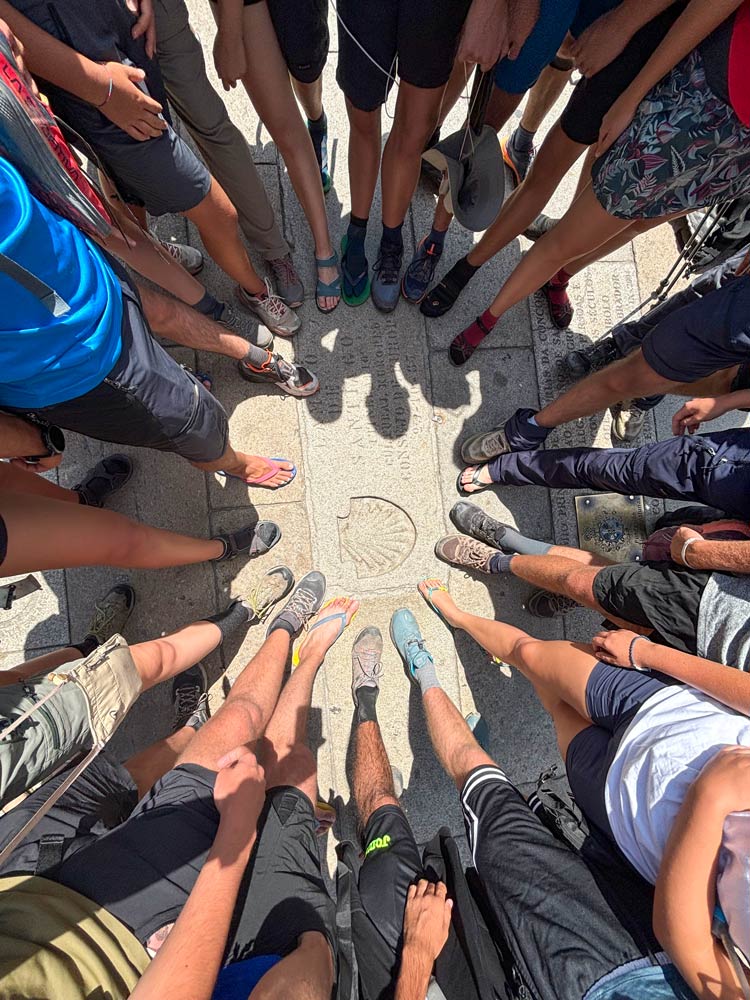
On August 1st, after a five-day journey, the group reached Santiago de Compostela. As Lorenzo recounts, arriving in the city “marked the fulfillment of our path. Reaching the destination means more than just completing a journey. For those who walk the Camino in faith, Santiago offers a moment to pause, reflect on the road traveled, and entrust one’s intentions, questions, and loved ones to the Lord.”
On August 2, the group attended Mass at the Cathedral before setting off for Madrid, and subsequently returned to Turin on August 3.
A journey that continues
Although the path traveled together was the same, the meaning each person took away from it was different. For some, the pilgrimage marked the end of a long journey within the group, while for others, it was merely the beginning. Penelope shares: “The Camino de Santiago coincided with the end of my time in ‘Cima 1’—it was an opportunity to rediscover oneself while sharing a unique experience with people I’ve known for a long time. Santiago taught us that, with perseverance and determination, any goal can be reached, and that by allowing others to help us, we can arrive at our destination with a smile and a heart full of memories, emotions, and lived experiences. It was a significant moment for some of us, as it represented the conclusion of a group journey that had lasted many years, while for others, it served as the start of a new path within ‘Cima 1’.”
“Reflections, lighthearted moments, and the everyday gestures we shared accompanied us throughout the journey, fostering a sense of group spirit and bringing us ever closer together,” add Elisa, Matteo, and Paolo. “We also want to remember those who, like Isa, could not be there in person, but were with us the entire way.”
Perhaps the meaning of this experience can be found in Lorenzo’s words: “Once we return, we are left with the realization that the Camino does not end upon arrival in Santiago: the negative and positive experiences we lived through during those days will remain a part of us and of our own journey through life and faith. We set out from Turin to reach Santiago, but we returned with something that goes beyond the distance covered: the value of time spent together, the beauty of setting out on a journey, and the desire to bring what we experienced into our daily lives.”